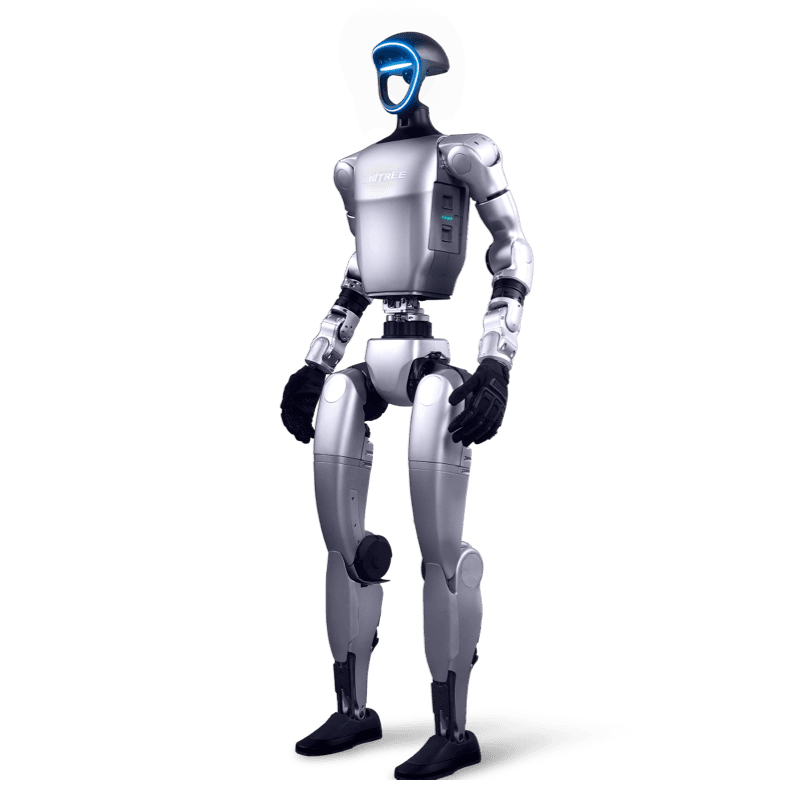
What Was Announced
According to Joyson Electronics, the delivery took place on November 10, 2026. The company describes the step as the point where the strategic partnership the two companies formed this year moves into product deployment.
The release positions the backpack as the core carrier of Joyson's "brain" software and hardware solution for embodied AI. The headline states that the unit delivered is the "first" backpack; the release does not say how many units were delivered or when further deliveries will follow.
What the Module Does
The release lists the module's functions as follows:
- Compute and energy in one package: a high-performance edge computing platform is paired with an efficient energy system.
- Standalone external computing module: it can operate as a separate unit, providing additional computing resources for environmental perception, data acquisition, autonomous decision-making and dynamic motion control.
- On-robot inference: it supports real-time on-device inference of embodied AI models and the continuous optimization of physical AI agents.
- Operating time: according to the company, it improves energy management and significantly extends robots' continuous operating time.
- Compatibility: according to the release, it is compatible with Unitree's humanoid, quadruped and wheeled robots.
What the Release Does Not Say
The release gives no technical specifications: compute performance (TOPS), processor or chip, memory, battery capacity, power draw, weight and price were not disclosed. Nor does it state which Unitree model the first unit will be used with, a mass production schedule or a sales channel. It is therefore not possible at this stage to match the module to a specific Unitree robot or to put a number on its effect on operating time.
Scope of the Partnership
According to the release, alongside the backpack the two companies are jointly developing core robot components such as dexterous hands and high-performance solid-state battery energy management systems. The goal is scalable, standardized, mass-producible component solutions that can be deployed across different robot types; the release presents this as a response to industry challenges around computing power, endurance and actuation. According to the release, the partnership draws on the two companies' respective strengths in automotive components, intelligent manufacturing, robot hardware and software, and the development and production of multiple robot types.
The companies are also working on automotive parts and intelligent manufacturing scenarios, covering data collection, hardware and software integration, industrial foundation model training, pilot deployment on production lines and large-scale replication. According to the release, further progress in joint component development and industrial applications is expected later this year.
On-Robot Compute in Unitree Robots
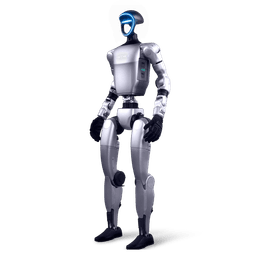
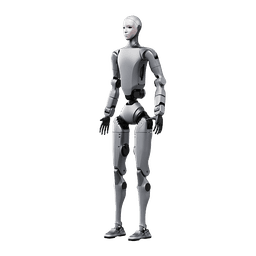
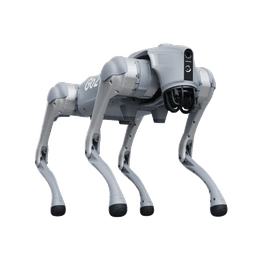
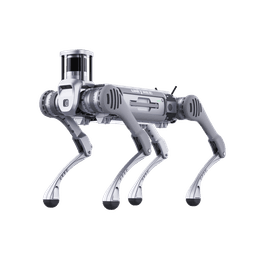
Research teams' need to run their own models on the robot is not new; Unitree's developer editions already ship with additional compute options. According to the specification tables on Unitree's official product pages, the main options are:
| Model | Additional compute option | Battery |
|---|---|---|
| Unitree G1 EDU | High computing power module (EDU only), e.g. Orin | 9,000 mAh, quick-release |
| Unitree H2 EDU | High-power computing module (EDU only), e.g. Thor | 972 Wh (15 Ah), quick-release smart battery |
| Unitree Go2 EDU | High computing power module (EDU only), e.g. Orin (40-100 TOPS) | 15,000 mAh long-endurance (EDU) |
| Unitree B2 | Standard Intel Core i5 + i7; optional Intel Core i7 or Orin NX, up to 3 devices | 45 Ah (2250 Wh), 58 V |
These are Unitree's own configurations; no link to the Joyson module has been announced. When an additional compute unit draws on the robot's battery, operating time shrinks. According to the release, the Joyson module instead combines its edge computing platform with an energy system in the same package. For the effect of an extra computer on a field robot's power budget, see our rugged Jetson Orin computer guide.
What It Means for Turkey
For university labs and R&D teams in Turkey, one of the deciding questions when choosing a humanoid or quadruped robot is whether perception and AI models can run on the robot itself, without depending on a network connection. On-robot inference cuts latency, lets data be processed on the robot and makes work easier on sites with weak connectivity. On the other hand, every additional compute unit adds weight, heat and power draw, so project plans should size compute needs and operating time together.
Joyson's delivery shows that suppliers beyond the robot maker are also developing components for this need. For projects in Turkey, the ready option today is the Unitree developer editions offered by Robotlar.org as the Official Distributor of Unitree Robotics in Turkey. Robotlar.org will share updates on the module on this page.
As the official Unitree distributor in Turkey, Robotlar.org supplies developer editions such as the G1 EDU, H2 EDU and Go2 EDU; the additional compute configuration, installation and integration support are set out in writing in the quote. To get started with the development environment, see the Unitree G1 SDK development guide and the G1 EDU, H2 EDU and Go2 EDU pricing pages.
Sources
- Joyson Electronics, PR Newswire release: Joyson Electronics Delivered First High-performance Robotic Brain Backpack to Unitree Robotics (Hong Kong, November 11, 2026)
- The Manila Times, republication of the same PR Newswire release (November 12, 2026)
- Unitree G1 official product page
- Unitree H2 official product page
- Unitree Go2 official product page
- Unitree B2 official product page