What Was Announced
NVIDIA's blog post covers a set of open technologies presented at CoRL: world action models, simulation tools, benchmarks and workflows driven by AI agents. The main items are:
- GR00T 2: an open world action model built on NVIDIA Cosmos.
- Isaac Lab 3.0: the new major release of the open source robot learning framework.
- Isaac Lab-Arena 0.4: a policy evaluation framework; according to the post, a developer preview is arriving at CoRL.
- Newton: an open source physics engine with tighter Isaac Lab integration for deformable objects such as cables and cloth and for multi-joint robotic hands.
- Benchmarks: DexBench, a dexterity benchmark developed by RLWRLD with NVIDIA (15 tasks across four scenes), and VABAR, prepared with UC Berkeley and covering six industrial tasks.
GR00T 2: Results Reported by the Company
World action models aim to help a robot anticipate how its own actions will change the environment. According to NVIDIA, GR00T 2 was trained on diverse robot and human data, including 100,000 hours of egocentric human data that the company has released as open source.
The figures below are NVIDIA's own statements and have not been independently verified:
- Without task-specific demonstrations, the model completed 40 of 50 evaluated tasks at least once.
- With one demonstration per task it averaged 71% success across 50 tasks, rising to 95% with five demonstrations.
- The model ranks among the top three in its categories on the RoboCasa365, RoboLab, RoboDojo and MolmoSpaces benchmarks.
The first item is not a success rate: according to NVIDIA's research page, average success in trials without demonstrations is 40%, and at least one trial succeeded on 40 of the 50 tasks.
The blog post does not name the robot bodies used in these evaluations and links to NVIDIA's research page for the model. According to that page, the robot data spans parallel-gripper arms (YAM and Franka), dexterous hands (Sharpa and Wuji) and the Unitree G1 humanoid. The same page marks the code as "available in December"; it does not state a release date or access terms for the model weights.
Isaac Lab 3.0 and Simulation Tools
Isaac Lab is the open source framework in which robot policies are trained in simulation. According to the post, with version 3.0 researchers can use AI agents to set up training environments with simulation-ready assets, switch between the PhysX and Newton physics solvers, choose a renderer and use a library for reinforcement learning post-training. The release is published on GitHub under the v3.0.0 tag.
According to the company, Isaac Lab 3.0 with Newton reached up to 2.5 times the training throughput of Isaac Lab 2.3 with PhysX on a vision-based dexterous manipulation benchmark. That figure comes from a single benchmark; results may differ across tasks and hardware.
How It Relates to the Unitree G1 and H2 Plus
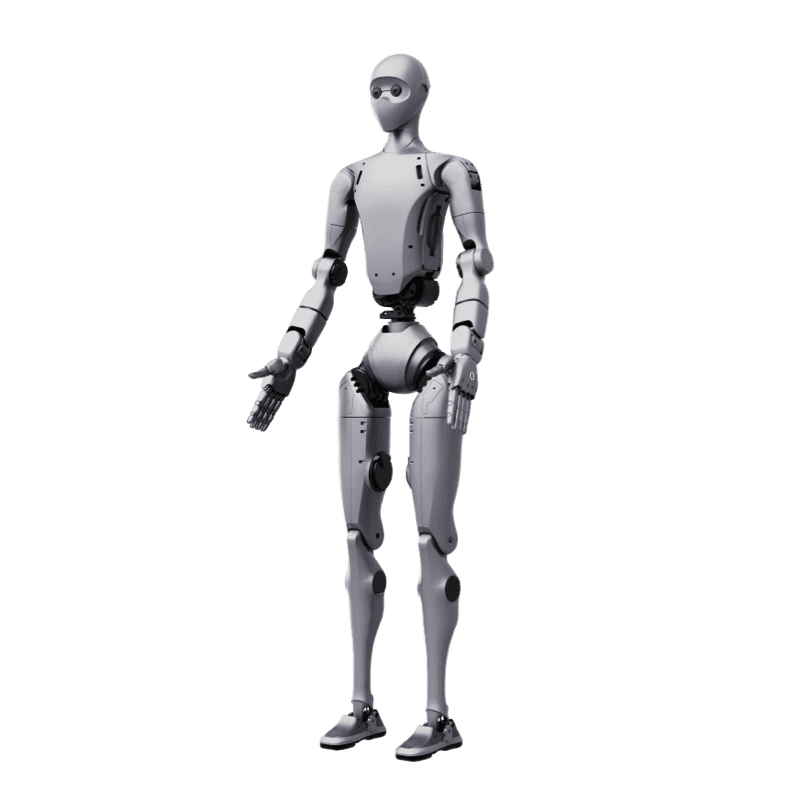
In a press release dated June 1, 2026, Unitree announced the H2 Plus as an NVIDIA Isaac GR00T reference humanoid robot for academic research. According to the release, the reference design combines the H2 Plus body, Sharpa Wave tactile five-finger hands, the NVIDIA Jetson AGX Thor T5000 compute unit and Isaac GR00T software.
The same release stated that the H2 Plus would be available in late 2026, that the GR00T platform would also support the Unitree G1 humanoid, and that the G1 reference workflow was expected on GitHub and Hugging Face. The release does not give a GR00T version number.
For the G1 there is NVIDIA's own publication: according to the GR00T 2 research page, the smaller GR00T 2 Turbo variant runs on the Jetson Thor onboard a Unitree G1 and steers the robot through the SONIC whole-body controller. These are results from NVIDIA's research setup, not a published installation path or support announcement for a standard G1.
For the H2 Plus the relationship is limited to this: the H2 Plus is the reference design built on Isaac GR00T, and GR00T 2 is the newest member of the same model family, introduced at CoRL. The sources reviewed contain no official statement on whether GR00T 2 runs on the H2 Plus or when it will be supported. Neither NVIDIA's November 9 blog post nor the research page mentions the H2 Plus.
What It Means for Turkey
For university labs and R&D teams in Turkey, the concrete part of the announcement is that the tools are open. Isaac Lab is open source and can run on a GPU workstation; teams can start building environments, training policies and evaluating them in simulation before a physical robot arrives.
On the GR00T 2 side there are points still to wait for: the code has not been released yet (the research page points to December), the access terms for the model weights and compatibility with the H2 Plus have not been announced, and the G1 results so far come from NVIDIA's own research setup. It is safer not to build project schedules on that uncertainty and to proceed with workflows that are documented today. For the existing simulation-to-real workflow on the G1, see the Unitree G1 and NVIDIA Isaac GR00T development guide.
As the official Unitree distributor in Turkey, Robotlar.org handles institutional requests for the G1, H2 and H2 Plus. NVIDIA's software and models are published by NVIDIA; on compatibility, the manufacturers' official statements should be taken as the reference.
Sources
- NVIDIA Blog: Practice Makes Precise: At CoRL, NVIDIA and Partners Reveal How Robots Rehearse Delicate Work in Simulation (November 9, 2026)
- NVIDIA GEAR research page: GR00T 2
- Isaac Lab v3.0.0 release page (GitHub)
- Unitree press release: Unitree Announces H2 Plus, an NVIDIA Isaac GR00T Reference Humanoid Robot for Academic Research (Hangzhou, June 1, 2026)
- NVIDIA official YouTube channel: GR00T 2 introduction video (November 13, 2026)